 Tesseract
Why Doesn't the Electron Fall In? A science film made in Tesseract
A short documentary on why hydrogen does not collapse: the classical death spiral, the energy valley, the electron cloud inside the proton and the dying stars that finally merge them. With three interactive models, and how Tesseract made it.
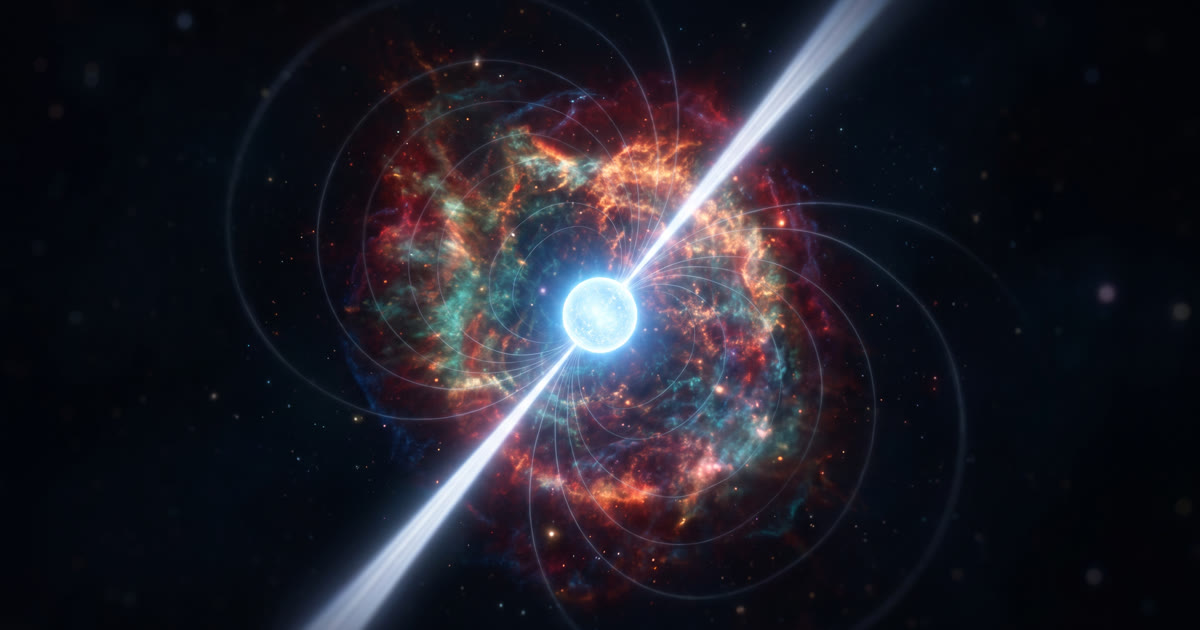
Most of the matter you can see in the universe is hydrogen: one proton, one electron, and an electric pull between them that grows four times stronger every time the distance halves. By the physics of 1911, every hydrogen atom should collapse in about sixteen trillionths of a second. It has lasted thirteen billion years instead.
We made a short documentary about why, from the first line of research to the 4K master, in Tesseract.
The question in two minutes
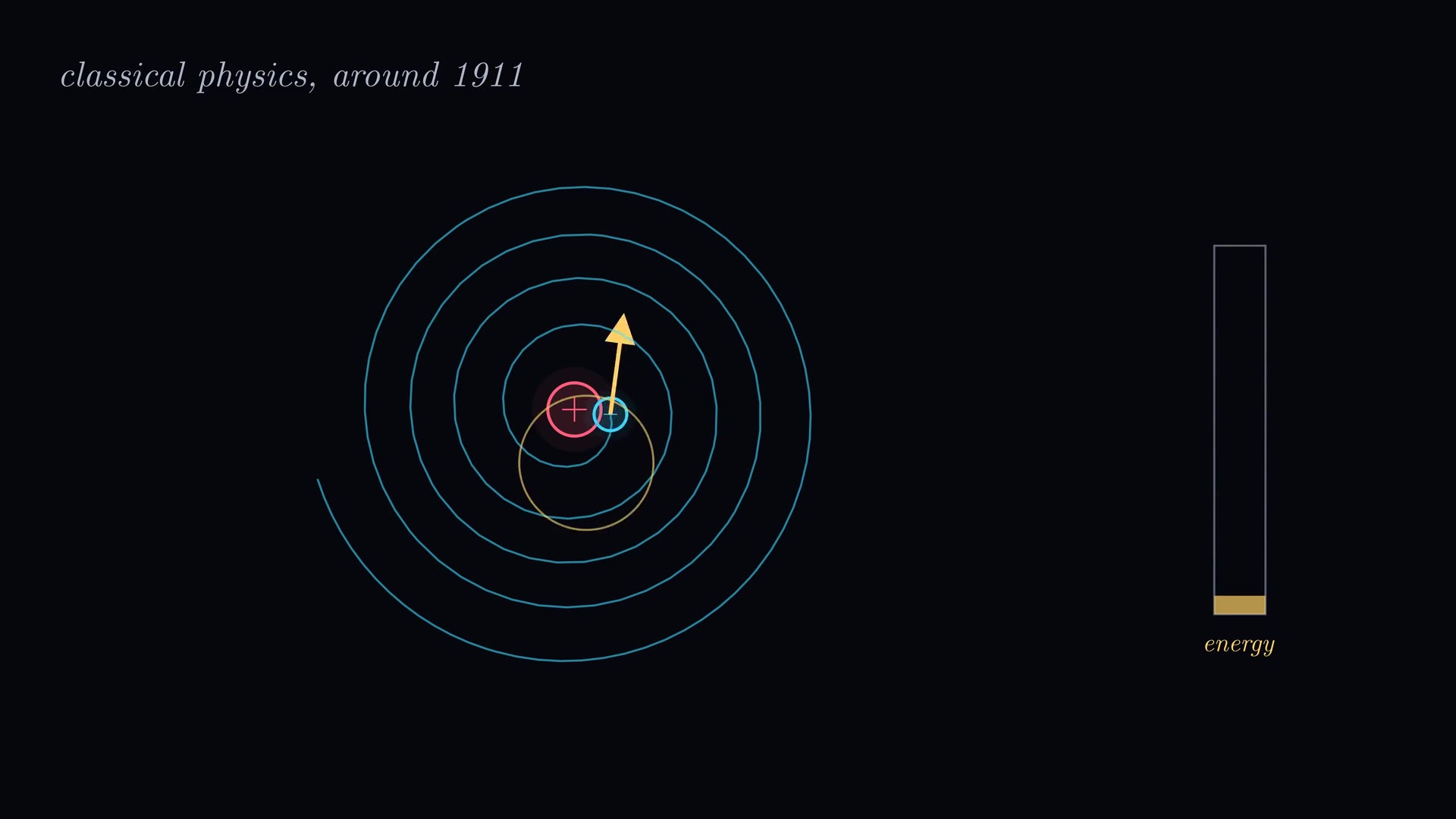
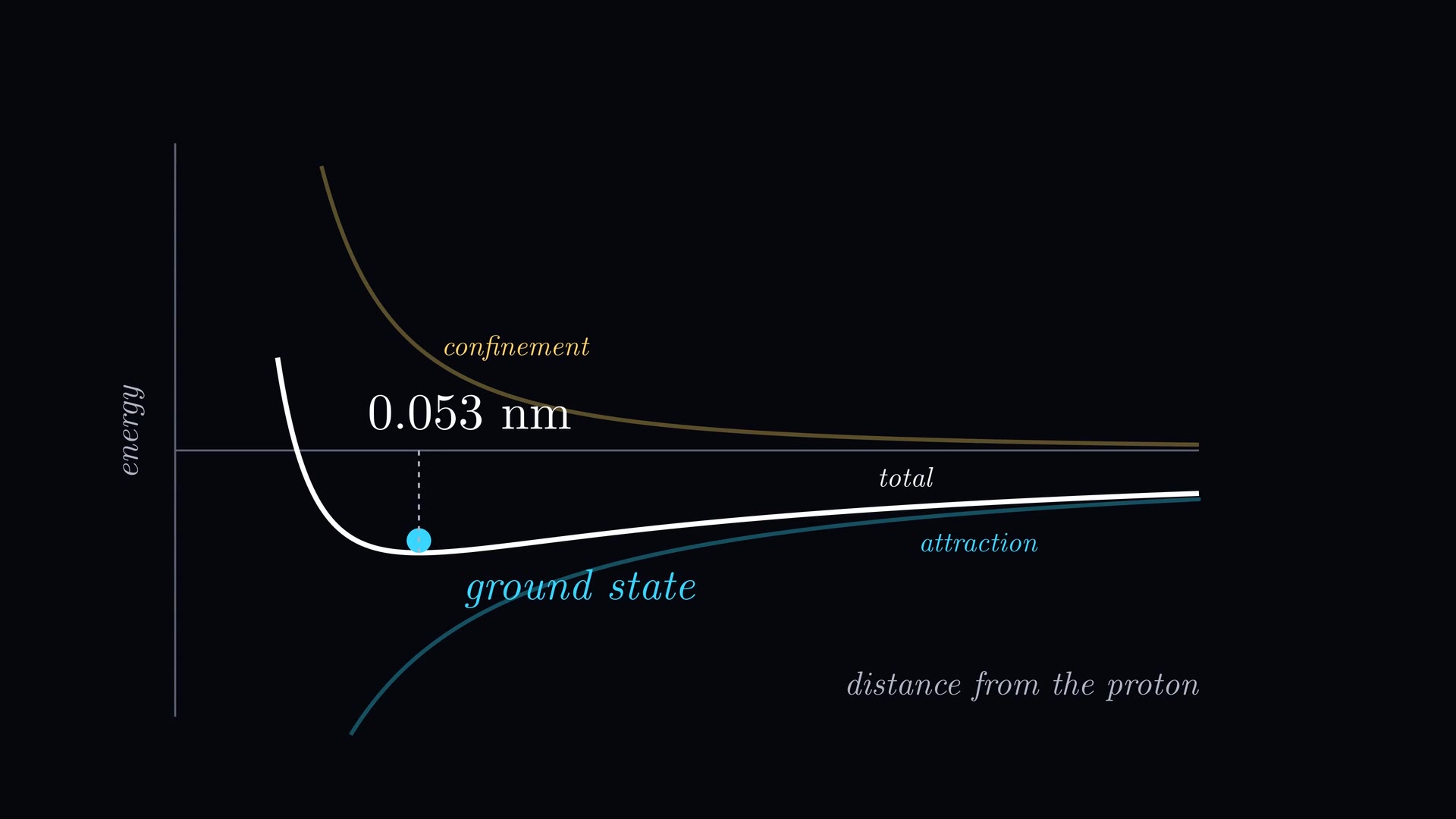
An electron circling a proton keeps changing direction, and a charge that does that gives off light. Light carries energy away, so the orbit should shrink until the electron spirals in. Quantum mechanics stops the fall: an electron behaves like a wave, and squeezing a wave into a smaller space makes it wiggle faster, which costs energy. Attraction pulls the energy down, confinement pushes it up, and the total is lowest at about 0.053 nanometres. That is the ground state, and there is no lower step to fall to.
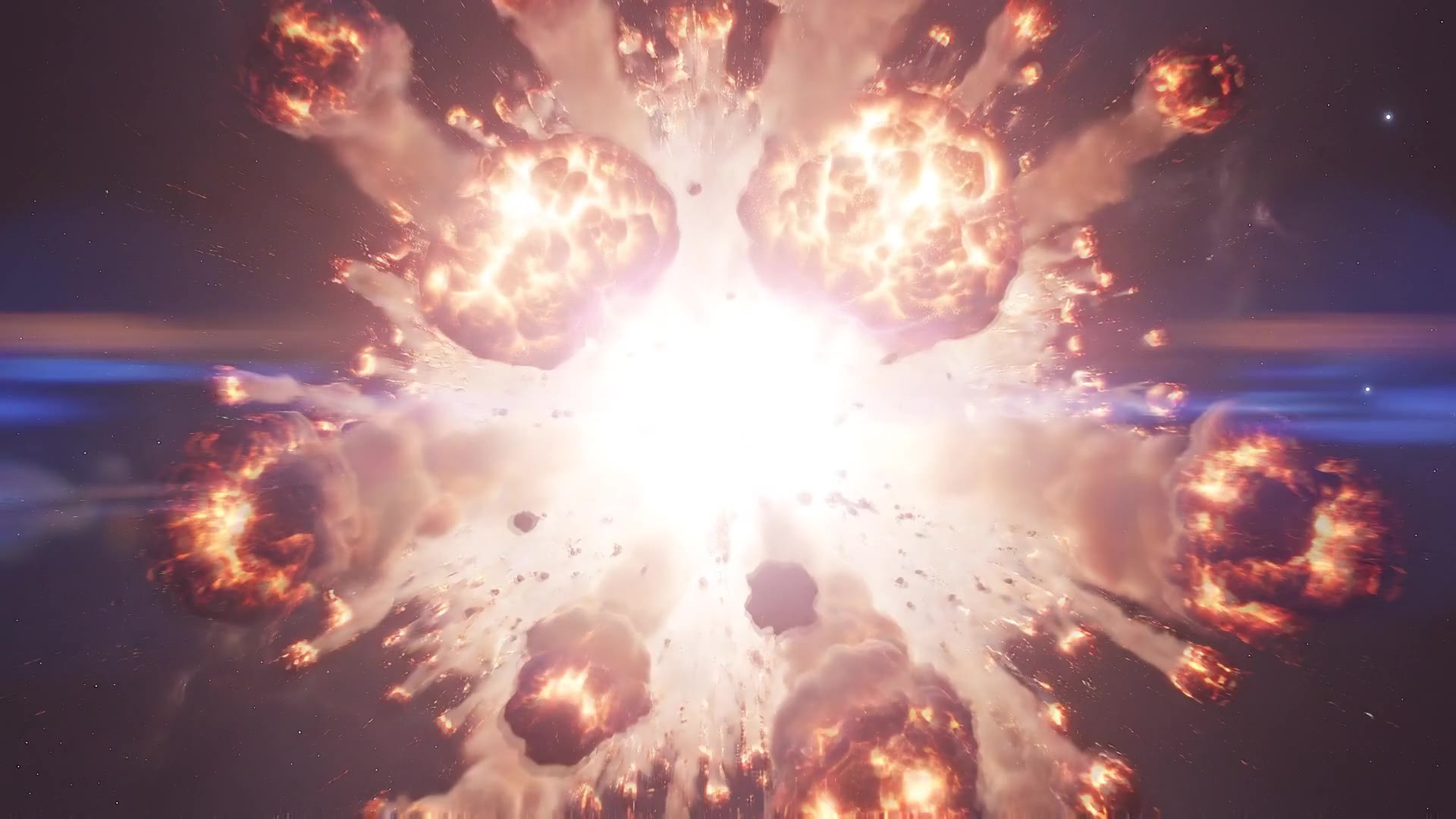
The electron does reach the proton, though. Its cloud is densest right at the centre, so for a tiny fraction of the time it is inside the proton. It still cannot merge into a neutron, because a neutron weighs 0.78 MeV more than a proton and an electron together. Only a collapsing star pays that price, and what it leaves behind is a neutron star.
Try it yourself
Start the classical atom and watch it die, then switch on quantum mechanics and watch it settle into a cloud that stays.
Drag the electron towards the proton and away from it. The total energy has one lowest point, and that point is the size of hydrogen.
Zoom 63,000 times, from the whole atom down to the proton, and draw a circle anywhere to see the chance that the electron is inside it.
How the film was made
Every step happened in Tesseract, and each one is something you can ask for in plain words.
- Research and script. The story was written to be told in one breath, scene by scene, and every number in it was checked: the 16-trillionth-of-a-second fall, the 0.053 nm ground state, the 0.78 MeV gap, a sugar cube of neutron star weighing about as much as every person on Earth.
- Narration. A calm British documentary voice, recorded scene by scene with the lines around it, so the delivery flows. Each take was listened back word by word against the script.
- Drawn animation. The diagrams are code, rendered in 4K: thin lines, real equations, and every animation timed to the word the narrator says, so “four times stronger” lands as the arrows grow.
- Space shots. The nebula, the red giant, the collapsing core and the spinning neutron star started as still keyframes, chosen first, then animated into cinematic clips.
- Music. One score in sections that follow the story: wonder, rising tension in the death spiral, calm curiosity for the quantum part, an epic swell at the supernova, a quiet end.
- The mix and the cut. The music dips under the voice and returns in the pauses, mastered to YouTube’s loudness, with English subtitles and a vertical cut for Reels, Shorts and TikTok.
Longer films, on any subject
The same way of working makes a ten-minute explainer or a half-hour documentary: Tesseract plans long videos of up to 30 minutes in up to 300 scenes, keeps one look, one voice and one score across all of them, and makes series that stay consistent episode after episode. History, science, travel, a product launch or a lesson for your class: describe the film, approve the plan and the keyframes, and it builds the rest.
Make your own film: download Tesseract and describe the documentary you want to see.